
Checking product movements in inventory is an essential task for any business that manages stock, whether a supermarket, an electronics store or a distribution warehouse. It lets you track every incoming and outgoing product movement, keeping your inventory up to date. For example, reviewing product movements in a grocery store helps you identify the best-selling items and products with low stock, so you can make informed purchasing decisions. In this article, we will show you how to check product movements in Odoo 15 to manage your inventory efficiently and effectively.
The Odoo Inventory module is essential for efficiently managing the flow of products within a company. It supports detailed stock tracking, optimized inventory management and more accurate business operations.
The Odoo Inventory module includes the ability to check product movements, whether transfers between warehouses, purchases, sales or other operations.
In this detailed tutorial, we will explore how to check product movements within the module. This skill is crucial for internal checks and for knowing the status of a specific product that needs follow-up by the relevant department.
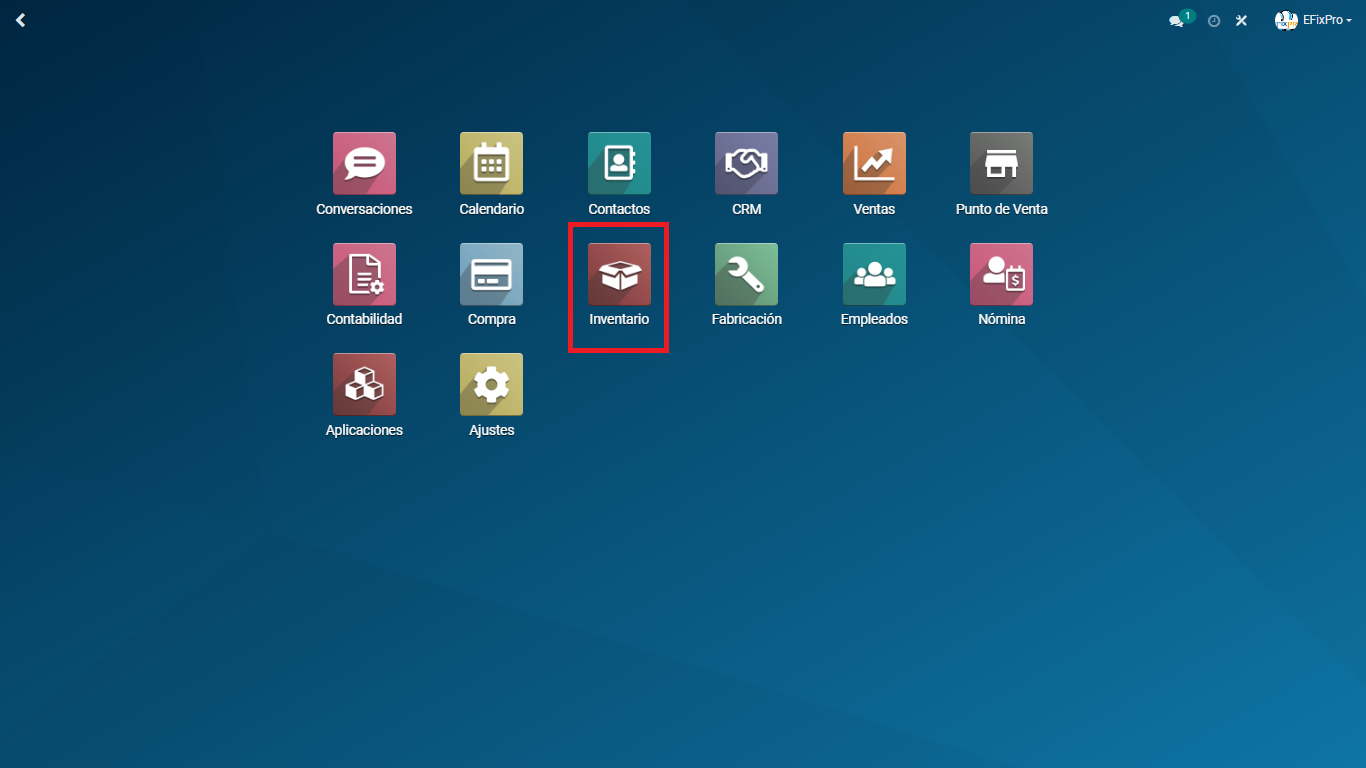
From the Odoo main menu, go to "Inventory".
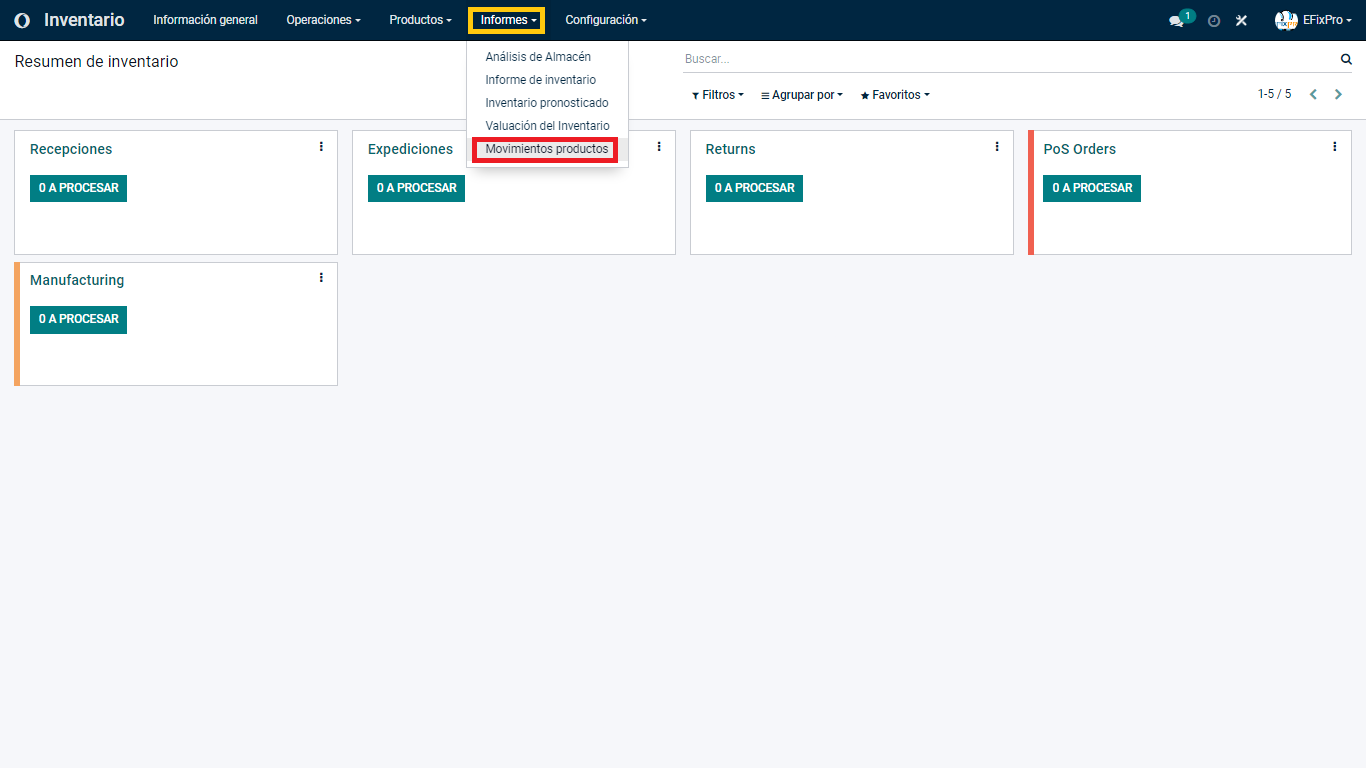
Once inside the Inventory module, you will see several options in its top menu. Here, we are interested in the "Reporting" tab and its "Product Moves" option.
For this example, we created a sample database with a few basic products.
In this view, you can identify several product movements, some filters applied by default, and abbreviations for each type of product movement recorded in the system.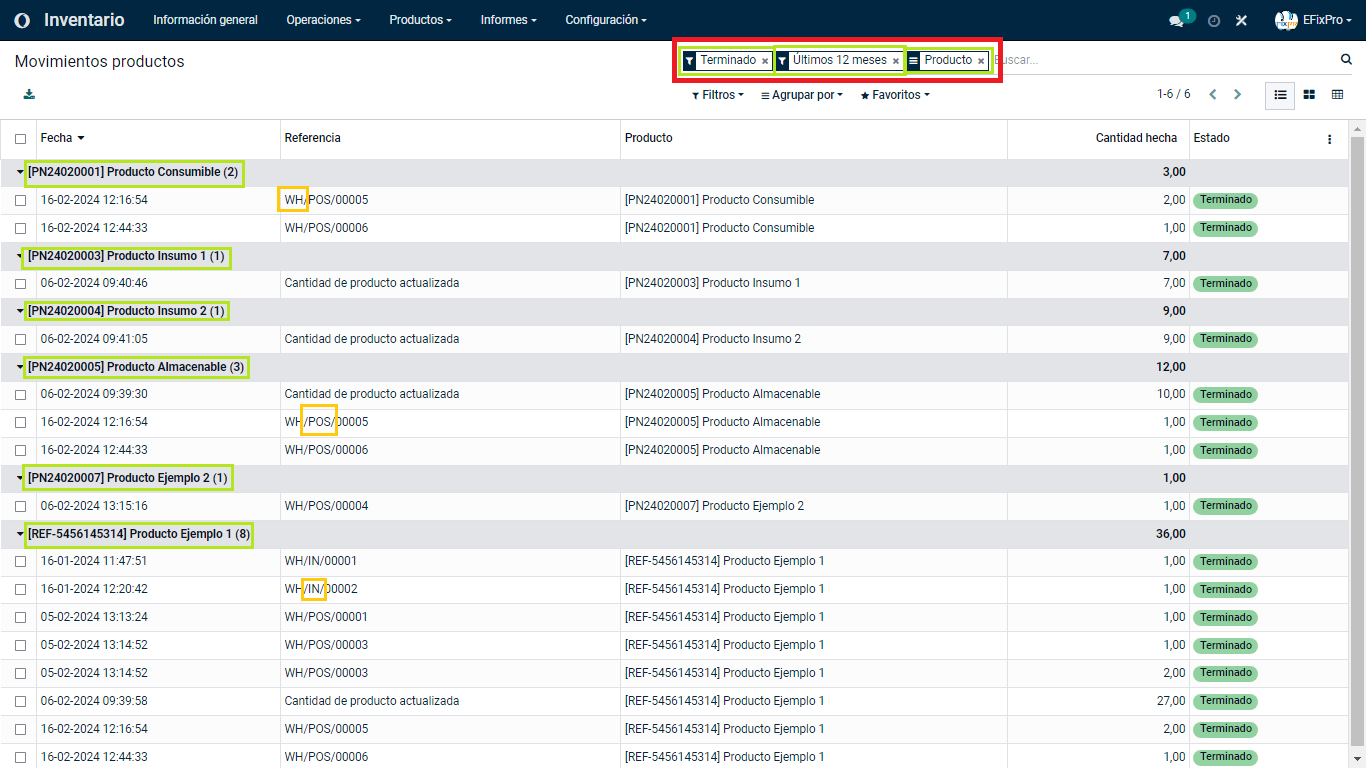
Let us identify the meaning of each element shown in this view
Filters:
- Done: This indicates that all product movements have a completed status, meaning that no additional action is needed for the relevant product process.
- Last 12 months: This filter shows all product movements recorded in the database during the last 12 calendar months.
- Product: This filter groups each action by the products created in the database that also have a movement recorded in the system.
(To learn more about applying filters to any information form in your database, visit this step-by-step article for a more detailed explanation.)
With these filters applied, the Reference column may show unfamiliar terms. These terms are created automatically by the system. If you would like your own abbreviations, ask your sales advisor about a custom development.
To learn the meaning of some of these labels, visit our Odoo Glossary of Terms.
Applying different display filters can produce different results. In this example, I will guide you through viewing product movements grouped by "LOCATION AND STATUS". We will see how to display all movements from the last quarter of the previous period and the first quarter of the current period.
Filters:
- Last quarter of the previous period
- First quarter of the current period
Grouped by:
- Location
- Status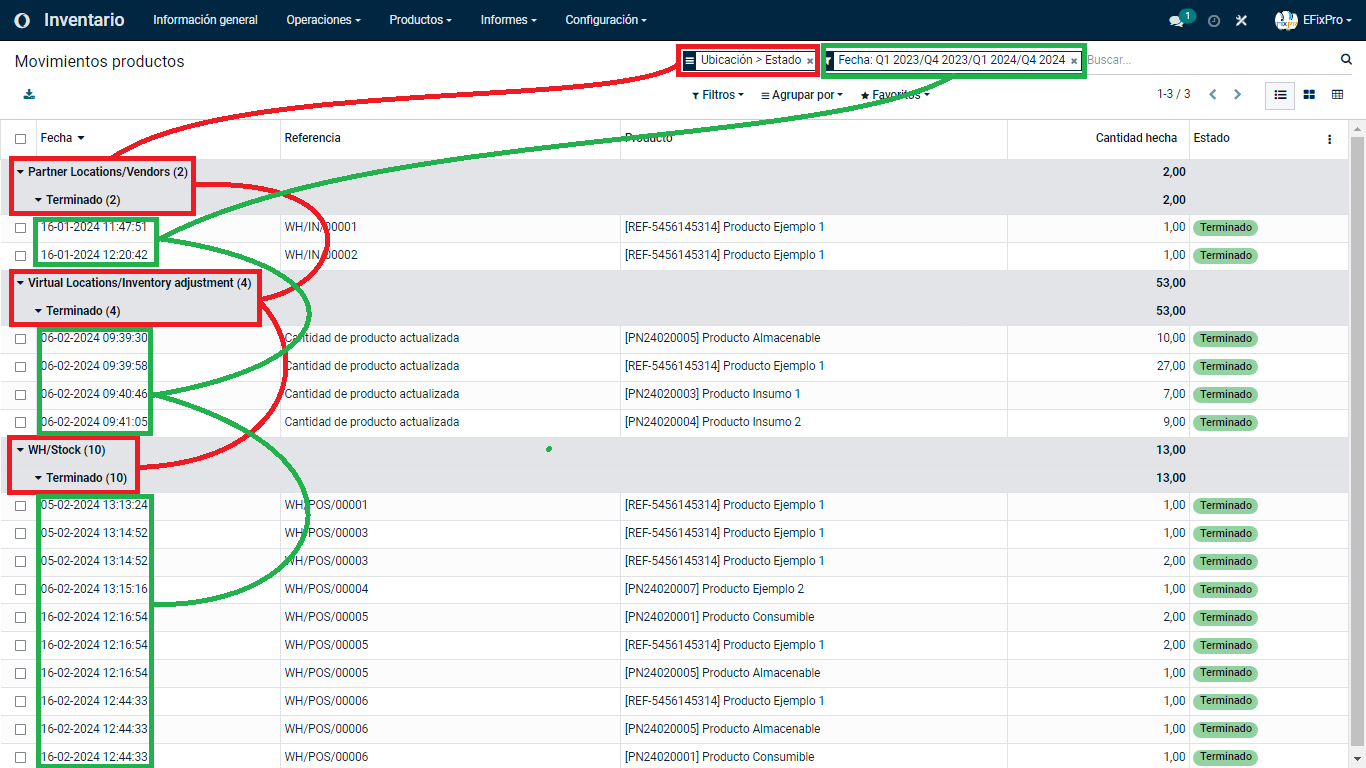
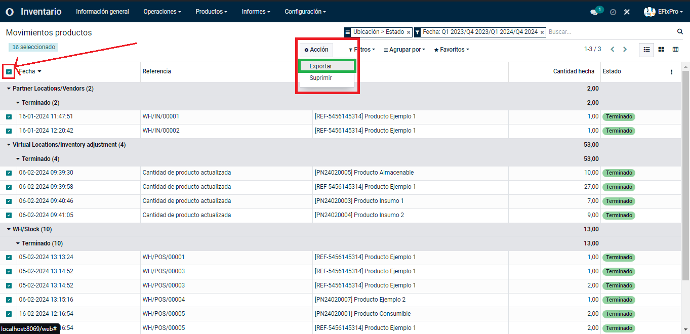
Finally, to export all the information provided by the database or a specific selection, select the checkboxes at the top left, next to the "Date" column. You can then select all movements and easily export them to an Excel pivot table.
Learning to check product movements in Odoo 15 gives you more accurate control over inventory, which is crucial for any business. If you run a clothing store, for example, knowing each garment's movements helps you manage purchases and provide a more satisfying shopping experience. This practice improves inventory management while helping you prevent losses and maximize profits. Add this skill to your daily routine and improve your business's operational efficiency with Odoo 15.